Scrapping Stamp Duty Could Unleash 38,000 New Homes and 349,000 Sales Annually, Research Shows
 Nov, 26 2025
Abolishing Stamp Duty Land Tax (SDLT) on primary residences could unlock 38,000 new homes and trigger 349,000 extra housing sales every year in the UK — a seismic shift in a market long choked by transaction costs. The finding, published in August 2024 by the Adam Smith Institute, a London-based free-market thinktank, gained fresh urgency in November 2025 as policymakers weighed sweeping tax reforms. What’s startling isn’t just the scale — it’s how deeply SDLT has warped British housing behavior. Families are stuck. Builders are hesitant. Markets are frozen. And the tax, which brought in £13.9 billion in 2024/25, is costing far more in lost mobility than it raises in revenue.
Why Stamp Duty Is Trapping Britain
For most homeowners, SDLT isn’t just a fee — it’s a psychological barrier. A family in Manchester might want to downsize after their kids leave home, but the £4,550 tax on their £291,000 home (the national average) feels like a penalty for wanting to move. The Adam Smith Institute found that scrapping SDLT on owner-occupied homes would boost homeowner mobility by 56 percent. That’s not a minor uptick. That’s a revolution. People aren’t just moving for jobs anymore — they’re moving for life stages. Empty nesters, young couples, retirees — all held hostage by a tax that punishes change.
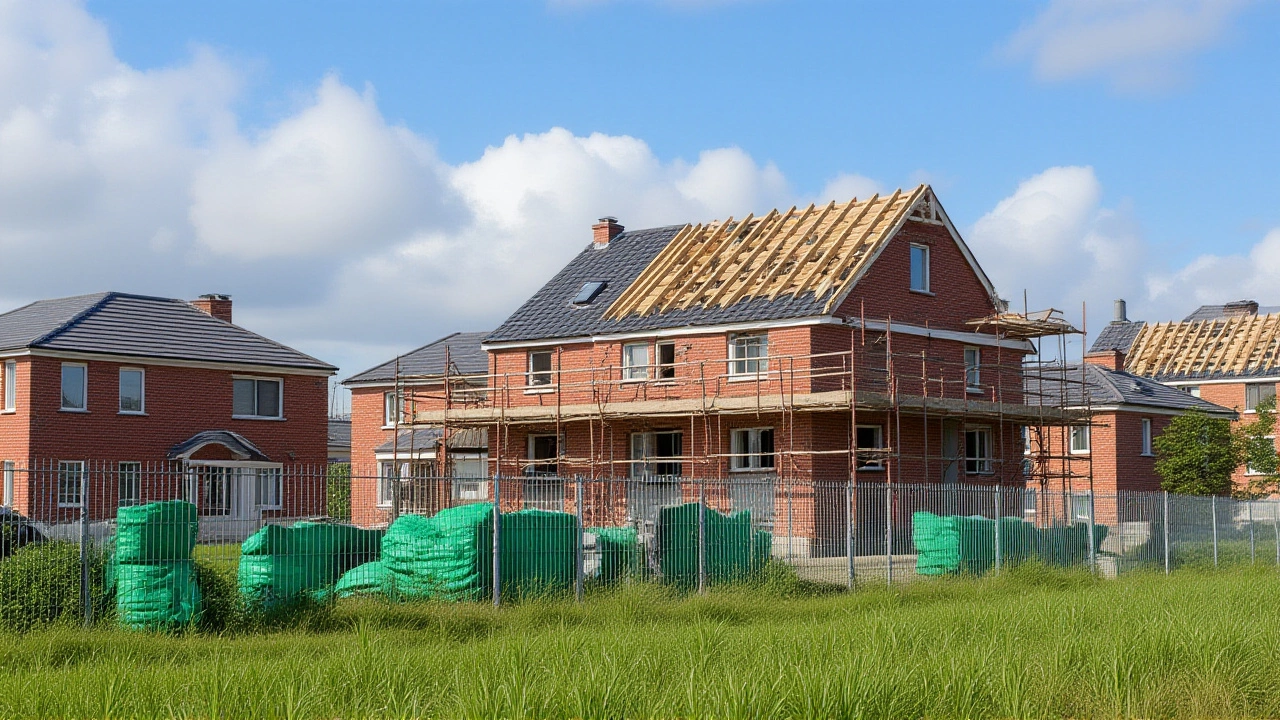
It’s not just individuals. Builders feel it too. With fewer transactions, developers hesitate to start new projects. Knight Frank, the global real estate consultancy, confirmed that eliminating SDLT would lead to 38,000 additional homes built annually — roughly 152,000 over a decade, or 10 percent of the government’s entire housing target. That’s not speculative. That’s based on real-world data from housing starts, buyer confidence surveys, and construction pipeline modeling.
The Price Tag — And How to Pay for It
Yes, scrapping SDLT comes with a cost. The Tax Policy Institute estimated a £5.1 billion annual revenue loss over the remainder of Parliament. But here’s the twist: that cost could be offset — and even exceeded — by a smarter, simpler tax.
Enter the Onward thinktank’s proposal: replace SDLT with an annual property tax on homes over £500,000. Under their model, owners would pay 0.54 percent on values between £500,000 and £1 million, rising to 0.81 percent for homes above £1 million. Crucially, this tax would be paid in one lump sum by the seller at the time of sale — not as an annual bill. For a £2 million property, that’s £216,000 over 20 years (equivalent to 0.1 percent annually), versus the current £153,750 upfront under SDLT. The math isn’t perfect, but it’s more predictable. And it doesn’t punish people for moving.
Even more intriguing? The Tax Policy Institute suggests a land value tax of just 0.1 percent on private dwellings — averaging £206 per home nationwide. That’s £5.15 billion in revenue, exactly matching the SDLT gap. It’s progressive, too. A £3 million London mansion would pay thousands. A £150,000 terraced house in Hull would pay under £50. It’s administered through Council Tax or direct invoicing — no complex filings, no surprises.

Who’s Behind the Push — And Who’s Against It
The political momentum is building. James Cleverly, Shadow Secretary of State for Housing, Communities and Local Government, called SDLT “one of the most damaging, un-Conservative taxes in Britain.” He’s not alone. The TaxPayers Alliance has publicly backed Kemi Badenoch’s plan to scrap the tax, citing the ASI’s figures. Knight Frank’s November 2025 report added credibility — not just confirming the 349,000 sales increase, but also estimating £12.9 billion in new construction spending annually. That’s not just housing. That’s jobs. That’s bricklayers, plumbers, architects, delivery drivers — small businesses thriving.
But the opposition is equally loud. Labour leader Sir Kier Starmer explicitly ruled out taxing the sale of main homes during the 2024 general election, saying he “absolutely” wouldn’t introduce Capital Gains Tax on primary residences. That’s a red line. And if the government replaces SDLT with a property tax paid by sellers, critics will argue it’s just Capital Gains Tax by another name — especially if it hits those who’ve lived in their homes for decades. Older homeowners, particularly in London, could be forced to sell or pay a hefty lump sum they didn’t expect.
The Ripple Effect: More Than Just Houses
This isn’t just about bricks and mortar. It’s about economic fluidity. When people move, they spend. They buy furniture. They hire movers. They upgrade appliances. They start new local businesses. The Saffery accounting firm noted in November 2025 that the government is seriously considering this overhaul — not as a gimmick, but as part of a broader plan to replace both SDLT and Council Tax with a modern, land-based system.
Imagine a retiree in Brighton who’s lived in her home for 40 years. Under the current system, she’s trapped. But under a 0.1 percent annual land value tax, she’d pay about £300 a year — not £15,000 upfront to sell. She might downsize. She might help her granddaughter buy her first home. She might even invest in a care home nearby. That’s not just housing policy. That’s social policy.

What Happens Next?
The Autumn Budget 2025 is the make-or-break moment. If the Chancellor moves to abolish SDLT and replace it with a land value tax, it could be the most transformative housing reform since the 1980s. But if the government tries to preserve the status quo — or worse, layers on new taxes — the housing market will keep stagnating.
One thing’s clear: the data doesn’t lie. The market is screaming for change. The question isn’t whether reform is needed — it’s whether politicians have the courage to act.
Frequently Asked Questions
How would scrapping Stamp Duty affect first-time buyers?
While first-time buyers benefit from lower upfront costs, the biggest gain goes to existing homeowners who can now move more freely. With 349,000 extra sales predicted, the increased supply of homes — especially mid-tier properties — would ease pressure on entry-level markets. A 56% rise in mobility means more homes become available as downsizers and relocators enter the market, indirectly helping first-timers find options they couldn’t before.
Why is the Adam Smith Institute’s research considered credible?
The Adam Smith Institute has a long track record of rigorous economic modeling, and its findings were corroborated by Knight Frank, Saffery, and the Tax Policy Institute — all respected institutions with access to real transaction data. Their models account for behavioral shifts, construction lead times, and regional price elasticity, making the 38,000-home estimate far more robust than typical political claims.
Would a national property tax hurt long-term homeowners?
It depends. Under the proposed 0.1 percent land value tax, most homeowners would pay less than £500 annually — far less than the £10,000+ they’d pay in SDLT when selling. But for those in high-value areas like London, the lump-sum payment at sale could be steep. The key is transition: if the tax is phased in gradually and exemptions exist for low-income retirees, it could be fairer than the current system, which penalizes mobility regardless of income.
What’s the difference between SDLT and a Capital Gains Tax on main homes?
SDLT is a transaction tax paid by buyers at purchase. Capital Gains Tax (CGT) is a profit tax paid by sellers when they make money on a sale. Labour’s pledge against CGT on main homes means they oppose taxing the profit — not the transaction. But if a new property tax is paid by sellers in a lump sum at sale, critics argue it’s functionally similar. The distinction matters politically — even if economically, both aim to capture housing wealth.
Could this plan actually deliver 38,000 new homes?
Yes — and the evidence is in the construction pipeline. Knight Frank’s analysis shows that each additional housing transaction triggers a 10-15% increase in building activity, as developers respond to higher demand. With 349,000 extra sales, that means more confidence, more financing, and more SME builders stepping in. The £12.9 billion in added construction spending isn’t theoretical — it’s based on historical correlations between sales volume and new starts.
Why hasn’t this been done before?
Because SDLT is a cash cow — £13.9 billion in 2024/25 is hard to give up. Politicians fear backlash from voters who benefit from the status quo, like second-home owners or investors. But the real beneficiaries of reform are ordinary families, small builders, and local economies. The political risk is high, but the economic reward — a fluid, fairer housing market — could be historic.