Lululemon's SoHo Flagship Tests if Experience Can Reverse 4% Sales Slide
 Nov, 29 2025
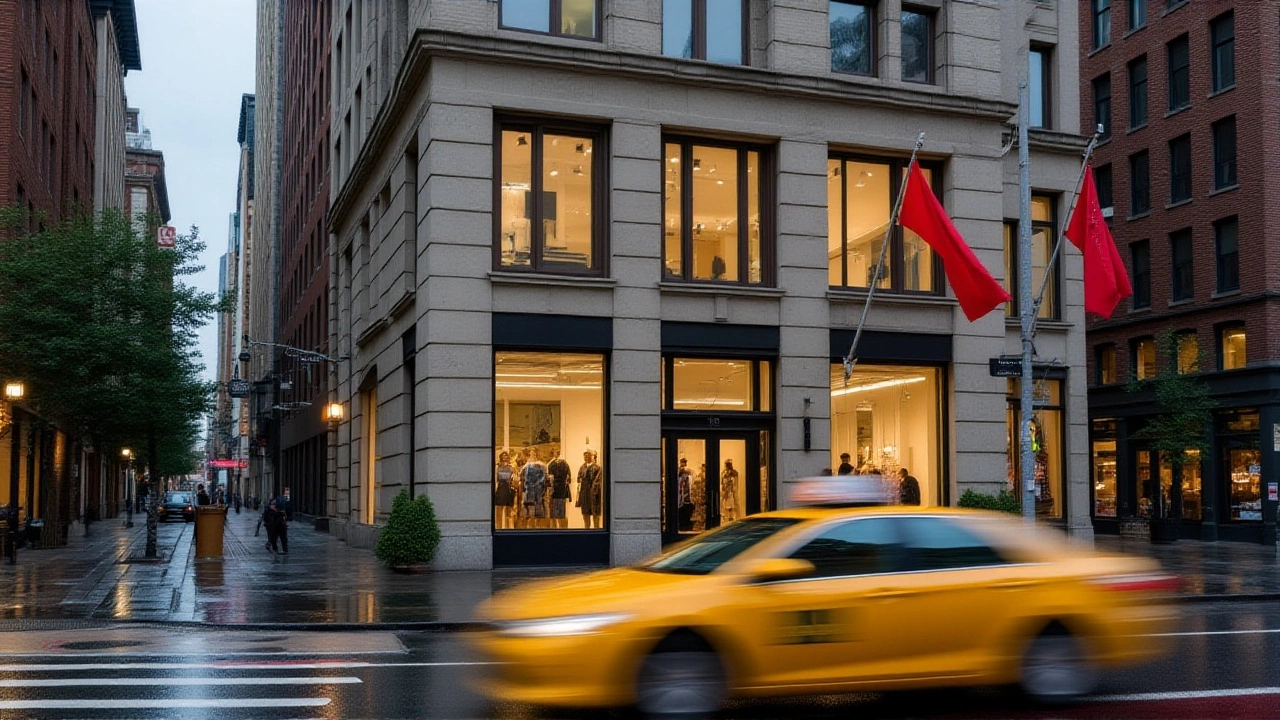
When Lululemon Athletica Inc. opened its 17,000-square-foot flagship in SoHo, Manhattan, it wasn’t just unveiling a new store—it was placing a $8.2 million bet on whether customers still crave places to belong, not just buy.
The Staleness Problem
Lululemon’s dominance in activewear once felt unshakable. For 28 straight quarters, comparable sales in the Americas grew—until they didn’t. In the quarter ending just before the SoHo debut, the company reported a 4% decline. Not a blip. A warning flare. The product, once revolutionary, had started feeling familiar. Too familiar. Customers weren’t walking in for the next technical fabric—they were walking out wondering what had changed.
CEO Calvin McDonald, who’s led the company since 2018, didn’t sugarcoat it. In Q3 earnings calls, he called product ‘staleness’ the elephant in the room. And he knew: you can’t innovate your way out of disengagement if the store itself feels like a warehouse with yoga mats.
The SoHo Experiment
Enter the SoHo flagship. Not a store. A stage. A sensory lab. The walls? 3D-printed from recycled ocean-bound plastic. The tiles? Hand-formed by New York ceramicists, each one slightly uneven, each one alive. The lighting? A custom system that mimics dawn to dusk, subtly shifting as you move through the space. No harsh fluorescents. No transactional vibes.
This is the physical embodiment of Lululemon’s Power of ThreeX 2 strategy—a $12.5 billion revenue target by December 31, 2026. One-third of that growth, CFO Meghan Frank confirmed, must come from guest experience. That’s why this store has community managers on staff, RFID-enabled fitting rooms that suggest matching leggings, and weekly yoga sessions that fill the space by 7 a.m. and 8 p.m.
It’s not about selling more yoga pants. It’s about making you feel like you’ve found your tribe. And if you stay longer? You buy more. The goal: 15% more dwell time. 10% higher conversion. 20% more participation in events.
Why SoHo? Why Now?
SoHo isn’t just trendy—it’s brutal. Foot traffic is high, but loyalty is low. If Lululemon can make people linger here, among luxury boutiques and streetwear giants, they’ve cracked something bigger. The international contrast is stark: China’s revenue jumped 16% in the same quarter. Europe’s growing. But in North America? The engine sputtered.
The timing couldn’t be worse—or better. Lululemon’s stock had dropped 18.7% year-to-date through Q3 2023. Investors were nervous. Analysts like Camilla Yanushevsky of Cowen & Company didn’t mince words: “If this fails by Q2 2024, the $12.5 billion target becomes mathematically improbable.”
That’s pressure. But Lululemon’s leadership believes this isn’t just about sales. It’s about identity. Since 1998, they’ve been a product company. Now, they’re trying to become a movement company. The SoHo store is their first real test.
The Blueprint and the Clock
If the numbers hit their targets by March 31, 2024, Lululemon will roll out this exact model to 12 more North American flagships in 2024. That’s $45 million in flagship investments this year alone—$8.2 million of it poured into SoHo. The company isn’t just betting on foot traffic. They’re betting on emotional resonance.
They’ve moved beyond “buy our gear” to “join our world.” The fitting rooms don’t just suggest sizes—they suggest community. The music isn’t generic pop—it’s curated playlists from local DJs. The scent? A proprietary blend of eucalyptus and cedar, developed with a New York perfumer.
It’s expensive. It’s risky. But here’s the twist: physical retail isn’t dead. It’s just been lazy. Lululemon is asking: What if a store could feel like a Sunday morning yoga class? Like a conversation with a friend who gets you? Like a place you miss when you’re gone?
What’s at Stake
For decades, Lululemon thrived because it sold the promise of transformation—through fabric, fit, and feel. Now, the transformation needs to happen inside the store, not just on the mat. If the SoHo model works, it could redefine how athletic brands think about space, connection, and loyalty.
If it fails? The $12.5 billion target evaporates. The domestic market stays flat. And the brand that once felt like a revelation starts feeling like a relic.
Frequently Asked Questions
How does the SoHo store differ from a regular Lululemon location?
Unlike standard stores, SoHo features 3D-printed recycled materials, hand-crafted tiles, and dynamic lighting designed to mimic natural daylight. It includes community managers, extended hours for wellness events, RFID-enabled fitting rooms, and curated playlists—all aimed at increasing dwell time and emotional connection, not just transactions.
Why is Lululemon focusing on physical stores when e-commerce is growing?
While online sales are strong, Lululemon’s domestic growth has stalled due to product saturation. The company believes physical spaces that foster community and sensory engagement can boost conversion rates and customer lifetime value—key to hitting its $12.5 billion revenue target. The SoHo store is a live experiment in turning retail into ritual.
What are the success metrics for the SoHo flagship?
Lululemon is measuring three benchmarks within six months: a 15% increase in guest dwell time, a 20% uplift in community event participation, and a 10% improvement in sales conversion rates. A formal evaluation is scheduled for March 31, 2024, to determine whether to expand the model to 12 more North American locations.
How does this fit into Lululemon’s broader financial goals?
The ‘Power of ThreeX 2’ strategy targets $12.5 billion in revenue by December 31, 2026—nearly double its 2021 revenue. Guest experience initiatives, including flagship stores like SoHo, are expected to drive 33% of that growth. Without a domestic turnaround, hitting the target requires near-impossible international growth rates.
What role does sustainability play in the SoHo store design?
Sustainability isn’t an add-on—it’s core. The store uses 3D-printed walls made from 100% recycled ocean-bound plastic, ceramic tiles crafted by local New York artisans, and a lighting system designed to reduce energy use. These choices align with Lululemon’s brand values and appeal to environmentally conscious consumers who expect ethical practices beyond product labels.
What happens if the SoHo store doesn’t meet its targets?
If performance falls short by March 31, 2024, Lululemon may delay or scale back its planned rollout of 12 additional flagships. Analysts warn that failure could undermine investor confidence and make the $12.5 billion revenue goal unattainable without drastic price increases or international overreach—both risky moves in a slowing global economy.